7 minute read
Best crypto hardware wallet: Ledger vs Trezor compared
TL;DR - key takeaways
Ledger vs Trezor — which hardware wallet should you buy? A practical comparison covering security, price, coin support, and ease of use to help you choose the right one.
If you just need the link, you can get your Ledger referral code here.
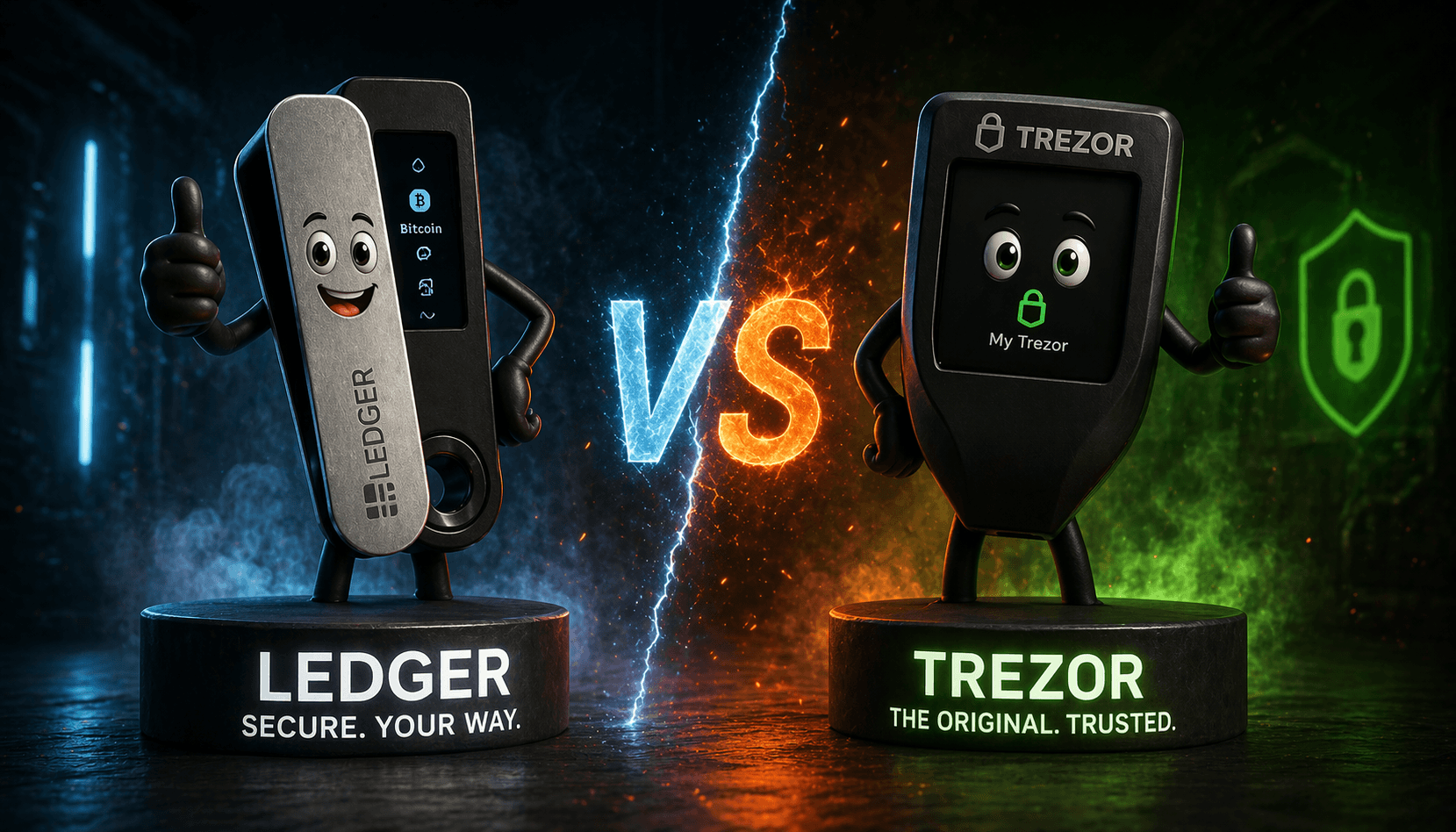
If you hold cryptocurrency and want to take it off an exchange, a hardware wallet is the standard recommendation. The two brands that dominate the market are Ledger and Trezor — and the choice between them is where most people get stuck.
I've used a Ledger since 2020. I haven't owned a Trezor, so this comparison is based on published specifications and user reports for Trezor, and first-hand experience for Ledger. I'll be clear about where I'm speaking from experience versus summarising.
Why you need a hardware wallet at all
Every crypto exchange hack reinforces the same lesson: if you don't control your private keys, you don't truly own your crypto. Mt. Gox, FTX, Celsius, BlockFi — the list of platforms that lost or froze customer funds is long and still growing.
A hardware wallet stores your private keys on a physical device that never connects to the internet. Transactions are signed on the device itself, so even if your computer is compromised, your crypto stays safe.
Rule of thumb: if losing your crypto would hurt financially, get a hardware wallet.
Ledger vs Trezor: the quick comparison
| Feature | Ledger (Nano S Plus) | Trezor (Model One) | Ledger (Nano X) | Trezor (Model T) |
|---|---|---|---|---|
| Price | ~£60 | ~£55 | ~£130 | ~£180 |
| Coin support | 5,500+ | 1,200+ | 5,500+ | 1,200+ |
| Security chip | CC EAL5+ secure element | No secure element | CC EAL5+ secure element | No secure element |
| Open-source firmware | Partial | Full | Partial | Full |
| Bluetooth | No | No | Yes | No |
| Touchscreen | No | No | No | Yes |
| USB connection | USB-C | Micro-USB | USB-C | USB-C |
| Mobile app | Ledger Live | Trezor Suite | Ledger Live (+ Bluetooth) | Trezor Suite |
Security: different philosophies, both effective
This is the most debated difference, and neither approach is objectively "better" — they're different security models.
Ledger's approach: secure element chip
Ledger uses a CC EAL5+ certified secure element — the same type of chip found in passports and bank cards. This chip is designed to resist physical tampering and side-channel attacks. The trade-off is that the chip's firmware is proprietary, meaning the security community can't fully audit it.
Trezor's approach: open-source everything
Trezor doesn't use a secure element. Instead, the entire firmware and hardware design is open-source, meaning anyone can audit the code for vulnerabilities. The trade-off is that without a secure element, a sophisticated attacker with physical access to the device could theoretically extract the seed phrase using specialised equipment (a "fault injection" attack).
Which matters more?
In practice, neither device has had user funds stolen through a device-level exploit in normal use. The overwhelming majority of crypto theft comes from phishing, social engineering, and exchange breaches — not hardware wallet vulnerabilities.
If you prioritise auditability and transparency: Trezor. If you prioritise chip-level tamper resistance: Ledger. For most people, both are more than secure enough.
Coin support: Ledger wins clearly
Ledger supports over 5,500 cryptocurrencies. Trezor supports around 1,200. If you hold mainstream coins (Bitcoin, Ethereum, Solana, Polygon), both work fine. If you hold a wide range of altcoins, DeFi tokens, or newer chains, Ledger is significantly more likely to support everything on one device.
This is the single most practical difference for most buyers.
Software: Ledger Live vs Trezor Suite
Both manufacturers provide companion apps for managing your wallet:
Ledger Live is clean and functional. You can view balances, send and receive crypto, stake some assets, and access DeFi through integrations. The mobile app works well, especially with Nano X over Bluetooth.
Trezor Suite is similar in scope — portfolio overview, transaction management, and exchange integrations. It's browser-based and desktop-based (no dedicated mobile app, though mobile browser works).
Both are adequate. Neither is significantly better than the other for basic wallet management.
Which Ledger or Trezor should you buy?
Best for most people: Ledger Nano S Plus (~£60)
Bank-grade security chip, 5,500+ coins, USB-C, solid build. Does everything most crypto holders need at the lowest price. This is what I'd recommend to anyone who asks.
Best for mobile use: Ledger Nano X (~£130)
Same security as the Nano S Plus but adds Bluetooth so you can manage crypto from your phone without a cable. Worth it if you make frequent transactions on the go.
Best open-source option: Trezor Model One (~£55)
The cheapest hardware wallet from either brand. Fully open-source, solid for Bitcoin and major altcoins. The micro-USB port feels dated, and coin support is narrower than Ledger, but if open-source is your priority it's the right entry point.
Best Trezor overall: Trezor Model T (~£180)
Adds a colour touchscreen and USB-C. The touchscreen makes entering your PIN and passphrase on the device much more pleasant. Premium price for the Trezor ecosystem.
Where to buy (important)
Always buy directly from the manufacturer's website. Never from Amazon, eBay, or third-party resellers. Tampered hardware wallets are a known attack vector — devices have been intercepted and modified to steal seed phrases.
- Ledger: buy from the official Ledger store (referral gives up to $20 in Bitcoin)
- Trezor: buy from
https://trezor.io/
The verdict
For most people, the Ledger Nano S Plus is the best hardware wallet. It's affordable, supports the widest range of coins, uses a certified security chip, and the Ledger Live app is polished. The referral bonus gives you up to $20 in free Bitcoin on top.
Choose Trezor if open-source firmware is non-negotiable for you, or if you only hold Bitcoin and major coins and want full code transparency.
Both are vastly better than leaving crypto on an exchange. The decision between them matters far less than the decision to get one in the first place.
You might also like
- Ledger referral code: get up to $20 in Bitcoin when you buy a wallet
- How to spend Bitcoin in the UK: gift cards, top-ups and more
- Freetrade referral code: get a free share worth up to £100
Useful links (official resources)
- Ledger official store:
https://www.ledger.com/ - Trezor official store:
https://trezor.io/ - Bitcoin.org wallet guide:
https://bitcoin.org/en/choose-your-wallet
Personal finance writer and UK consumer savings specialist
I specialise in finding people the best deals to cope with the ever-increasing cost of living. I like to review companies from everyday industries like banking and energy and try to provide a fresh mix of facts and unbiased opinions.
Last verified: April 2026 · Last updated